
Introduction #
The purpose of this document is to offer guidelines to Channel Partners and End Users on how the LAN & WAN environment should be configured to be able to run the PhoneLine+ service successfully at a customer site.
If a channel partner and/or end user wishes to utilise another, non-Gamma access solution, they need to ensure that the solution can meet the requirements and functionality set out in this document. Failure to meet these requirements will result in quality and setup/support issues.
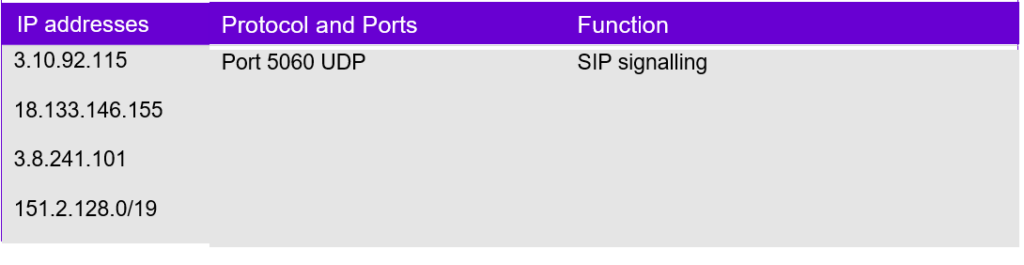
SIP Registration #
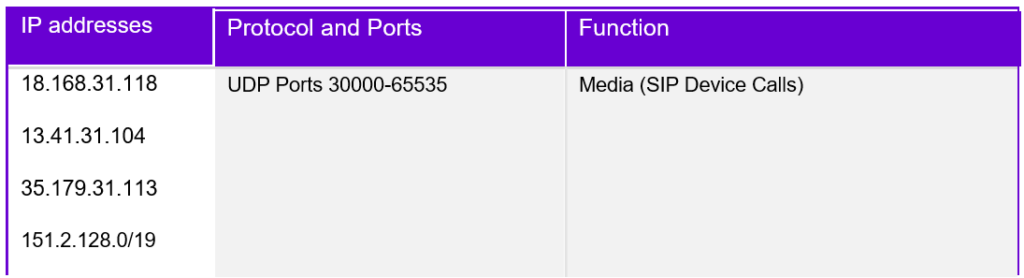
Media (SIP Device Calls) #
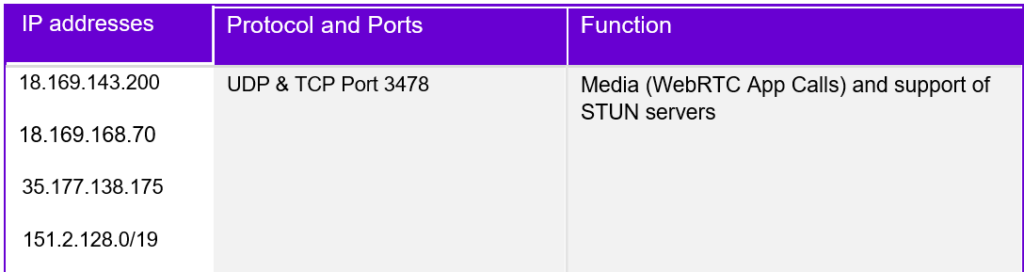
WebRTC Media & STUN Support #
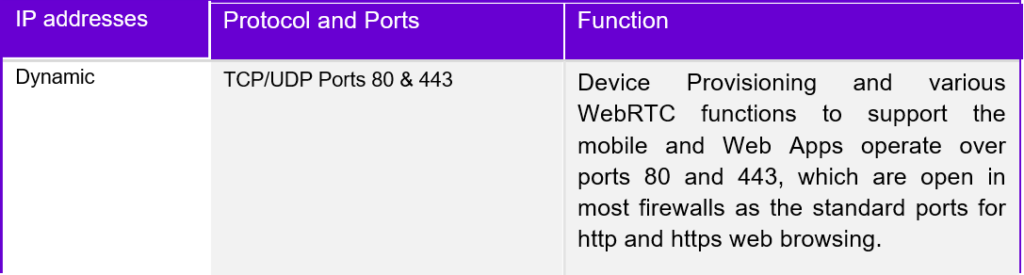
Device Provisioning and WebRTC Support #
SIP ALG #
SIP Application Layer Gateway (ALG) is common in many of today’s routers and in most cases enabled by default on enterprise, business and home broadband routers. Its primary use is to prevent problems associated to the router’s firewalls by inspecting VOIP traffic packets, and if necessary, modifying them to allow connection to the required protocols or ports.
On many business and home class routers Active SIP ALG will cause a mixture of problems by adjusting or terminating PhoneLine+ traffic packets in such a manner that they are corrupted and cause issues with the service, manifesting in a range of intermittent issues such as; one-way audio, dropped calls, problems transferring calls, handset dropping registration and making or receiving internal calls.
SIP ALGs should be disabled on all CPE routers, we will not accept any faults or issues raised against PhoneLine+ if a SIP ALG is enabled.
For instructions on disabling this feature please refer to the specific router user guide.
UDP NAT Timeouts #
Set UDP NAT Timeout > 300 seconds.
It is recommended that UDP NAT Timeout on the router is set higher than the SIP registration refresh interval for PhoneLine+ phones. That is higher than 300 seconds.
